
Introduction
E-commerce has transformed the global marketplace, offering businesses a dynamic platform to reach customers at any time, anywhere. With the continued growth of online shopping, driven by advancements in technology and shifting consumer preferences, the e-commerce industry has evolved from a simple alternative to traditional retail into a complex ecosystem that blends technology, marketing, and customer experience.
As more consumers turn to the internet for purchasing decisions, businesses must adapt their strategies to stay competitive and meet the ever-changing demands of their customers. This article will explore the evolution of e-commerce, the latest trends shaping the industry, and effective strategies that businesses can employ to thrive in this rapidly growing space.
The Rise of E-commerce: A Historical Perspective
The roots of e-commerce can be traced back to the early 1990s when the internet became more accessible to the general public. Initially, online shopping was seen as a novelty, with few consumers willing to trust the digital marketplace. However, with the emergence of major e-commerce platforms like Amazon and eBay, online shopping quickly gained momentum.
As technology improved, so did the consumer experience. The introduction of secure payment gateways, improved logistics, and a broader selection of products helped to boost consumer confidence in e-commerce. Over the past two decades, the rise of mobile technology, social media, and artificial intelligence (AI) has further revolutionized the e-commerce landscape, enabling businesses to create more personalized shopping experiences and streamline operations.
Opportunities:
-
Global Reach: E-commerce allows businesses to tap into global markets, making it easier to expand beyond geographic limitations.
-
Cost Efficiency: Online retail operations often require lower overhead costs than physical stores, allowing businesses to pass on savings to customers.
Challenges:
-
Market Saturation: The increasing number of e-commerce platforms has created a highly competitive environment, making it harder for new businesses to differentiate themselves.
-
Logistical Issues: Efficient inventory management and timely deliveries remain significant challenges for e-commerce businesses, especially with global shipping demands.
The Role of Customer Experience in E-commerce
One of the driving forces behind the success of e-commerce is the emphasis on creating seamless and engaging customer experiences. In today’s market, customers expect more than just a product—they want a smooth, enjoyable journey from discovery to purchase, and even beyond. The customer experience (CX) encompasses all aspects of the online shopping process, including website navigation, payment systems, delivery options, and customer service.
Personalization has become a key element in enhancing CX. Thanks to data analytics and AI, businesses can now tailor their offerings to individual preferences, providing recommendations based on previous browsing behavior or purchase history. This personalized experience not only helps customers find products they are more likely to purchase but also increases customer loyalty by creating a sense of being understood and valued.
Opportunities:
-
Improved Retention Rates: A personalized, engaging experience encourages customers to return, boosting lifetime value.
-
Data Insights: By collecting and analyzing customer data, businesses can make informed decisions that improve marketing efforts and overall customer satisfaction.
Challenges:
-
Privacy Concerns: As businesses collect more personal data to enhance CX, consumers are becoming increasingly concerned about privacy and data security.
-
Consistency Across Channels: Ensuring a seamless experience across various devices and platforms can be challenging, especially for businesses with limited resources.
Mobile Commerce: The Growing Dominance of Mobile Shopping
With the proliferation of smartphones, mobile commerce, or m-commerce, has emerged as a dominant force in the e-commerce industry. More consumers are using their mobile devices to browse products, compare prices, and make purchases, leading to an increase in mobile-specific shopping experiences.
In response to this shift, businesses have adapted by optimizing their websites and developing mobile apps that provide a smoother and more personalized experience. M-commerce allows consumers to shop anytime and anywhere, making it more convenient than ever to complete a transaction on the go.
Opportunities:
-
Enhanced Accessibility: M-commerce allows businesses to reach customers wherever they are, increasing the potential for spontaneous purchases.
-
Increased Conversion Rates: A well-designed mobile shopping experience can significantly increase conversion rates, especially when paired with user-friendly features like one-click purchasing.
Challenges:
-
Responsive Design: Ensuring that a website or app is optimized for all mobile devices and screen sizes requires a significant investment in design and development.
-
Mobile Payment Systems: While mobile payment systems are growing in popularity, businesses need to ensure they offer secure and widely accepted payment methods to gain consumer trust.
Social Media and E-commerce: The Rise of Social Commerce
Social media platforms have become powerful tools for driving e-commerce sales. With billions of active users worldwide, platforms like Instagram, Facebook, and Pinterest provide businesses with opportunities to market products, build brand awareness, and engage with their audience. The rise of social commerce has blurred the lines between social media and e-commerce, allowing consumers to purchase products directly through social media platforms.
For example, Instagram has introduced shoppable posts that enable users to buy products without leaving the app, while Facebook offers integrated marketplaces where businesses can set up storefronts. These integrations have made the shopping experience more seamless and convenient for consumers.
Opportunities:
-
Increased Engagement: Social media offers businesses a direct line to their audience, allowing for real-time interactions and more personalized communication.
-
Shoppable Content: Social commerce enables businesses to convert engagement into sales by providing easy access to product information and purchase options.
Challenges:
-
Platform Dependence: Relying too heavily on social media platforms for sales can be risky, especially when algorithms and policies change.
-
Authenticity: Consumers are increasingly skeptical of overly promotional content on social media, making it essential for businesses to create authentic, relatable campaigns.
The Importance of Search Engine Optimization (SEO) in E-commerce
SEO plays a crucial role in the success of any e-commerce website. In a crowded digital marketplace, ensuring that your website ranks high in search engine results is essential for attracting organic traffic. SEO involves optimizing your website’s content, structure, and performance to improve visibility on search engines like Google.
Effective SEO strategies include optimizing product descriptions, using relevant keywords, ensuring fast loading times, and creating high-quality backlinks. A well-optimized website is more likely to rank higher in search results, making it easier for potential customers to find your products.
Opportunities:
-
Increased Organic Traffic: Properly optimized websites attract more organic traffic, reducing the need for paid advertising.
-
Long-Term Results: Unlike paid ads, SEO efforts provide long-lasting benefits, continuously driving traffic to your site.
Challenges:
-
Constant Algorithm Changes: Search engine algorithms are constantly evolving, meaning businesses must stay updated with best practices to maintain their rankings.
-
Intense Competition: With many businesses vying for the same keywords, standing out in search results can be difficult, especially in competitive industries.
Artificial Intelligence and Automation in E-commerce
The integration of artificial intelligence (AI) and automation into e-commerce has revolutionized the industry, improving everything from customer service to inventory management. AI-powered chatbots, for example, can provide real-time customer support, answering questions and resolving issues without human intervention.
Automation tools can help streamline operations by managing repetitive tasks like email marketing, order processing, and inventory tracking, allowing businesses to focus on strategic growth. AI-driven analytics also enables businesses to make data-driven decisions, optimizing marketing campaigns and improving customer experiences.
Opportunities:
-
Enhanced Customer Support: AI-powered chatbots can provide instant responses to customer inquiries, improving customer satisfaction.
-
Efficiency Gains: Automation reduces the need for manual intervention, allowing businesses to scale operations without additional overhead.
Challenges:
-
Integration Costs: Implementing AI and automation systems can require significant upfront investment, especially for small businesses.
-
Dependence on Technology: Over-reliance on AI and automation can lead to a loss of the personal touch that many customers value in their shopping experiences.
The Future of E-commerce: What’s Next?
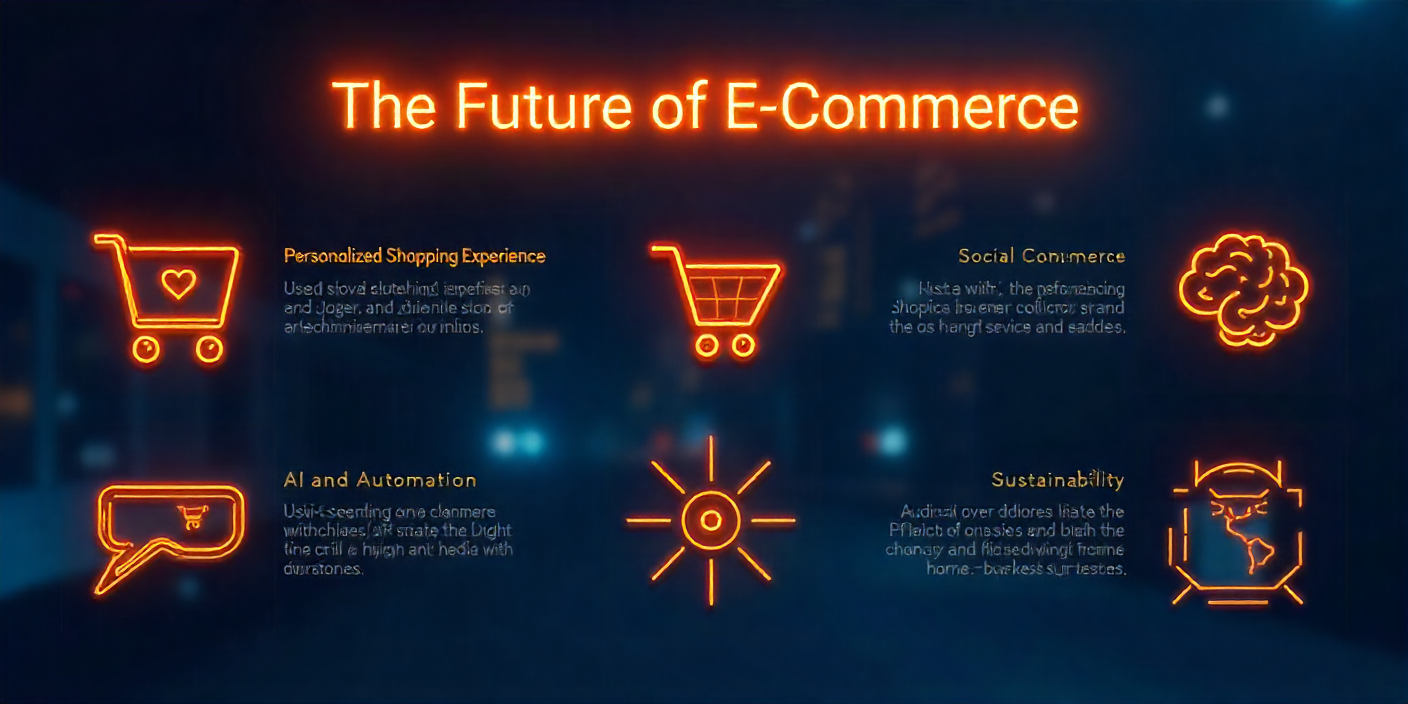
As technology continues to advance, the future of e-commerce is bright and full of potential. Some emerging trends to keep an eye on include:
-
Augmented Reality (AR): AR technology will allow customers to visualize products in their environment before making a purchase, enhancing the online shopping experience.
-
Voice Commerce: With the increasing popularity of voice-activated devices like Amazon Echo and Google Home, voice commerce will likely play a significant role in the future of e-commerce.
-
Sustainability: As consumers become more eco-conscious, businesses will need to prioritize sustainability in their product offerings and operations.
Opportunities:
-
Innovation: The future of e-commerce presents countless opportunities for businesses to differentiate themselves through new technologies and customer experiences.
-
Global Reach: E-commerce will continue to open up global markets, enabling businesses of all sizes to expand their reach.
Challenges:
-
Technological Hurdles: Implementing cutting-edge technologies can be costly and complex for businesses, especially those with limited resources.
-
Customer Expectations: As the e-commerce landscape evolves, customer expectations will continue to rise, making it challenging for businesses to keep up.
Conclusion
The world of e-commerce is continuously evolving, with technology and consumer preferences driving innovation and change. By embracing emerging trends, focusing on customer experience, and leveraging the power of data, businesses can thrive in the digital marketplace. The future of e-commerce offers endless possibilities, but businesses must stay agile, adapt to change, and continuously improve their strategies to remain competitive.